When Sarah noticed brown patches on her front lawn every August, she assumed her sprinkler schedule was the problem. Her system ran three times a week for 20 minutes — yet the soil near the shrubs stayed damp while the grass farther out fried. That mismatch left her frustrated and wasteful until she tried a different approach: moving thirsty plants to targeted, low-flow watering and using drip lines where they mattered most.
Why lawns and mixed beds lose water — and the basic fix
Lawns, flower beds, and vegetable patches all have different water needs. A single overhead sprinkler soaks the top of the lawn and the air, losing water to evaporation and wind drift. Problem: shallow, frequent watering encourages surface roots and unhealthy turf. Solution: apply water where roots actually use it, and do so slowly.
Drip irrigation delivers water directly to the soil at low pressure, which reduces surface runoff and evaporation. For example, a drip emitter that releases 0.5 gallons per hour over three hours supplies the same total volume as a 30-minute sprinkler cycle but soaks deeper into the root zone. According to the EPA’s WaterSense program, efficient irrigation practices and smart controllers can save homeowners thousands of gallons per year — some estimates cite savings up to 15,000 gallons annually for a typical household when systems are optimized (source: EPA WaterSense) https://www.epa.gov/watersense.
Match the setup to the problem: if you have a small patch of lawn with mixed plantings, combine short-run micro-sprays or drip for borders with a low-flow rotary for turf. For larger lawns, consider zoned watering so turf and beds don’t run on the same schedule.
How drip irrigation reduces water waste in real yards
Problem: your sprinkler soaks sidewalks and creates puddles near the driveway. That’s wasted water and uneven coverage. Solution: install drip tubing or soaker lines along beds and borders to keep water in the soil where roots are.
Concrete example
Take a 30-foot flower border along a driveway. A single 0.6 GPH emitter every 2 feet uses roughly 9 gallons in a 3-hour run. A typical spray head might dump 2–3 gallons per minute and wets the pavement too. With drip, most of that 9 gallons ends up in the root zone — less runoff, less evaporation.
Drip systems also help with deep, infrequent watering. University extension programs suggest deep watering encourages roots to grow downward, improving drought resilience. For vegetable gardens and raised beds, precision emitters reduce leaf wetting and disease risk, while conserving water because there’s little overspray onto paths or non-planted areas.
If you want step-by-step guidance tailored to drip advantages, you can learn how drip irrigation reduces water waste with practical layouts and emitter spacing that match common garden sizes.
Choosing the right components for different watering challenges
Problem: overwatering potted plants because hand-watering is inconsistent. Solution: use slow, steady self-watering or small drip stakes for containers. That’s an efficient fix for balcony gardens or clustered pots.
- Small lawn / mobile setups: use DIY mobile sprinklers or temporary drip lines for spot watering.
- Large lawn: zoned in-ground systems with timers and low-precipitation heads cut overspray and timing mismatches.
- Vegetable garden: precision drip emitters (0.5–1 GPH) placed at each plant root zone.
- Flower beds: soaker or drip tubing under mulch to supply slow root-zone moisture without wetting blooms.
- Potted plants: self-watering spikes or small dripper lines on a low-flow loop for steady delivery.
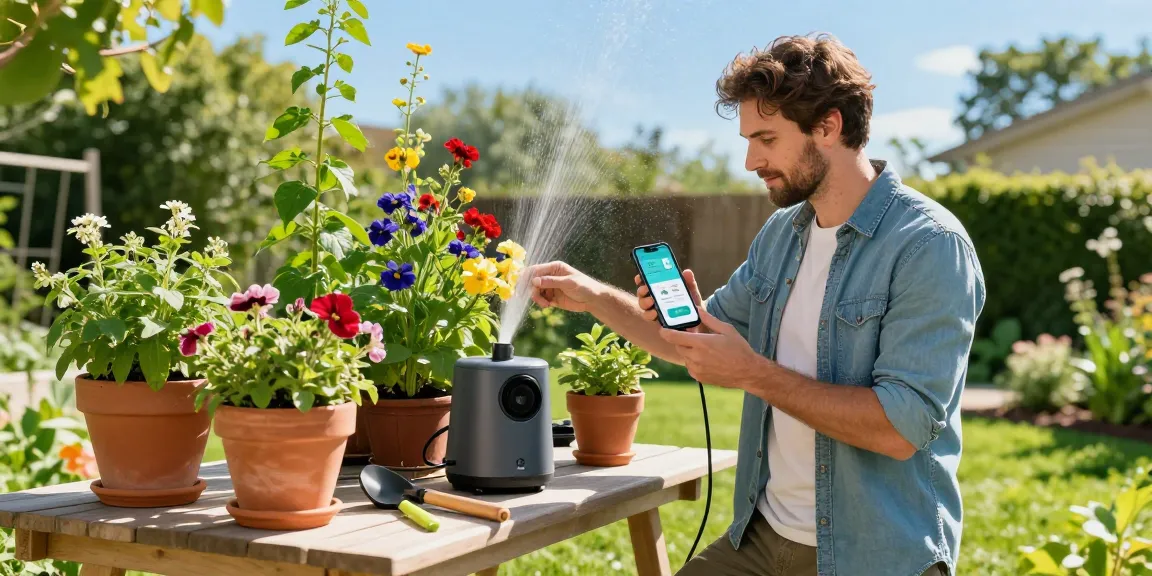
In practice, pairing a WiFi timer such as the RainPoint model with properly spaced emitters turns a chore into a set-and-forget system. Automated schedules that run in the cool of morning for longer, lower-output cycles reduce evaporation loss compared with short midday runs.
Installation tips that minimize waste and maximize performance
Problem: a newly installed drip system still leaves dry spots because emitters are too far apart. Solution: pick the right emitter flow and spacing for soil type and plant spacing.
Here are straightforward guidelines that save water and keep plants healthy:
- Test soil absorption — sandy soils need shorter, more frequent runs; clay soils need slower, longer runs to avoid puddling.
- Choose emitter flow by plant needs — 0.5–1 GPH for vegetables; 1–2 GPH for shrubs and small trees.
- Keep tubing under mulch to cut evaporation by up to 30% versus exposed lines.
- Zone by plant type so grasses don’t get the same runtime as deep-rooted shrubs.
Here’s a simple watering time chart to start with; adjust by local climate and soil:
Plant TypeEmitter FlowInitial Run Time (per session)Vegetable rows0.5–1 GPH60–120 minutesFlower beds0.5–1 GPH45–90 minutesShrubs & small trees1–2 GPH120–240 minutesTurf (rotary or low-flow heads)—10–30 minutes (multiple cycles)
Example: a homeowner in Tucson switched to two 90-minute drip sessions per week for raised beds and saw plant vigor improve while cutting total irrigation time by 40%. That kind of change reduces both water use and the frequency of hand-watering.
Monitoring, maintenance, and smart controls that keep savings real
Problem: systems lose efficiency over time — clogged emitters, misaligned tubing, or a timer still running on an outdated schedule. Solution: inspect quarterly, flush lines before summer, and use a smart controller when feasible.
Smart controllers adjust schedules based on weather, slope, and soil. According to university extension guidance, incorporating seasonal adjustments and rainfall sensors can cut outdoor water use significantly; some homes report 20–30% savings when switching from fixed schedules to weather-based controllers (source: multiple university extension publications).
Practical routine: walk zones monthly, look for wet spots or dry patches, and test a handful of emitters for flow rate. Replace clogged drippers — they’re cheap and extend system life. And if you want remote schedule tweaks, a WiFi timer from RainPoint can handle that schedule automatically, letting you shorten runs during cool, cloudy periods or pause irrigation after heavy rain.
Example: a suburban homeowner paired a RainPoint timer with drip lines on a 40-by-10-foot garden and switched to morning-only watering. Over a season, water use dropped by about 35% while harvests improved, thanks to deeper root growth and less disease from overhead wetting.